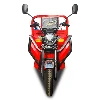
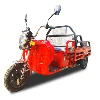
As a core tool for agricultural, urban and rural freight, and short-distance logistics, three-wheeled vehicles utilize both water-cooled and air-cooled engines as the two mainstream power solutions in the market. These engines differ fundamentally across ten dimensions: cooling principle, mechanical structure, heat dissipation capacity, power performance, durability, maintenance, fuel consumption and noise, applicable scenarios, purchase and operating costs, and adaptability to extreme working conditions. Especially since three-wheeled vehicles typically operate at low speeds, under heavy loads, frequently climb hills, and idle for extended periods, the differences between the two engine types are amplified by these operating conditions. Below is a complete breakdown and comparison.
I. Completely Different Core Cooling Principles, Vastly Different Heat Exchange Efficiencies
(I) Air-Cooled Engine Cooling Logic
Air cooling is divided into natural air cooling and forced air cooling specifically for three-wheeled vehicles. The core medium is air, relying on thermal convection for heat dissipation.
The engine block and cylinder head are integrally cast with dense aluminum alloy cooling fins (heat dissipation fins), significantly increasing the contact area between the metal and the air. When the vehicle is moving, the oncoming airflow washes away the heat from the fins. At low speeds/in traffic jams, a small cooling fan linked to the crankshaft provides forced airflow to assist in heat dissipation. Air has an extremely low specific heat capacity and weak heat absorption and storage capabilities. It can only remove heat from the engine's surface; the core heat-generating areas, such as the cylinder bore, piston, and combustion chamber, rely solely on metal-to-metal conduction for heat dissipation. The rate of heat accumulation far exceeds the rate of heat dissipation. Simply put, air cooling is like "air blowing to cool the exterior," with heat having difficulty penetrating the engine's interior.
(II) Water-Cooled Engine Cooling Logic
Water cooling relies on antifreeze (coolant) as the heat transfer medium, employing a closed-loop liquid circulation system to deeply envelop the heat-generating core components. This is a form of "internal circulation water cooling temperature control."
The entire system includes: cylinder block/cylinder head water jacket, water pump, radiator, electric cooling fan, water pipes, thermostat, and a reservoir. When the engine is running, the crankshaft drives the water pump, and the low-temperature coolant flows into the jacketed water jacket surrounding the cylinder bore and combustion chamber, directly absorbing the high temperatures generated by the piston, valves, and crankshaft. The heated coolant then flows through the radiator, where the electric fan forces airflow to cool it. The cooled liquid then returns to the engine for further circulation. Water's heat absorption capacity is thousands of times greater than air's, allowing it to evenly penetrate every high-temperature component of the engine. This precisely and stably locks the overall engine temperature within the optimal operating range of 85–100℃, resulting in minimal internal temperature differences and eliminating localized high-temperature buildup.
II. Differences in Mechanical Structure Complexity, Overall Weight, and Manufacturing Cost
1. Air-cooled Engine: Extremely Simple and Modular, Minimal Components
The main body of the engine consists only of the engine block and an external small fan, eliminating the need for a water tank, water pipes, water pump, thermostat, antifreeze lines, gaskets, and other auxiliary accessories. The cylinder block and cylinder head are cast as a single piece, with virtually no piping, joints, or seals, resulting in a compact overall structure and a weight reduction of 5–12 kg.
Fewer manufacturing processes and lower raw material costs mean that air-cooled engines of the same displacement have a manufacturing price 1000–2500 yuan lower than water-cooled engines, leading to a lower overall vehicle price. This makes it a standard option for entry-level commuter and light-duty tricycles.
2. Water-cooled engine: Multiple accessories, complex and precise structure.
In addition to the engine itself, a complete cooling assembly is added: water pump, multi-layer radiator, electronic temperature-controlled fan, inlet and outlet water pipes, multi-way seals, thermostat, coolant reservoir, water temperature sensor, and temperature control switch. The machine has numerous sealing points; rubber hoses, gaskets, and water pump oil seals are all independent consumable parts, making assembly complex and requiring higher machining precision.
The overall weight is greater, requiring space for a radiator installation at the front, resulting in a more complex frame layout. Manufacturer production costs and the final vehicle price are significantly higher than for air-cooled models.
III. Heat Dissipation Limits and High-Temperature Performance (The Most Critical Difference for Tricycles) Tricycles inherently have limitations in operating conditions: When loaded, speeds are generally 20–40 km/h; continuous long slopes in mountainous areas; exposure to direct sunlight in summer; frequent idling and starting/stopping in markets/construction sites; the shortcomings of air-cooled cooling will be fully exposed.
High-Temperature Defects of Air-Cooled Engines:
After 40-60 minutes of continuous heavy load, heat accumulates rapidly, with cylinder head temperatures soaring to over 130°C, far exceeding the engine's design tolerance.
During traffic jams and low-speed uphill climbs, insufficient airflow forces cooling from only a small fan, causing a 60% drop in cooling efficiency and making overheating, power loss, and sluggish acceleration highly likely.
At high temperatures, the piston and cylinder metal undergo severe thermal expansion, reducing clearance. This can lead to cylinder scoring, piston ring burning, or even engine seizure and shutdown.
During summer transport in open-air conditions above 35°C, single operations cannot exceed one hour; a 20-minute stop for natural cooling is necessary, severely impacting freight efficiency.
Advantages of Water-Cooled Engines at High Temperatures:
* The coolant continuously circulates, carrying away core heat. Even under full load climbing and continuous 6-hour high-intensity transport, the engine temperature remains stable at around 90℃, 20-30℃ lower than that of air-cooled engines during the same period.
* Idling and low-speed traffic jams are unaffected. The electric fan automatically starts and stops according to the coolant temperature, ensuring continuous cooling even when stationary, eliminating the need for mid-journey cooling shutdowns.
* There is no significant power reduction or heat fade in high-temperature environments, making it suitable for continuous hauling and long-distance inter-township transport.
* The combustion chamber temperature remains constant, significantly reducing the probability of knocking and high-temperature carbon buildup, resulting in a substantial decrease in failure rate under long-term heavy-load conditions.
IV. Differences in Power Output, Torque, and Climbing Performance:
* Engine temperature directly determines combustion efficiency and power stability. Power performance can be divided into two dimensions: instantaneous power and continuous power.
* Instantaneous Start (Short Distance Light Load): For the same displacement, the difference in starting power between air-cooled and water-cooled engines is minimal, resulting in similar driving experience for short distances without load.
Continuous Heavy Loads and Long-Distance Climbing
Air-cooled: As temperatures rise, the combustion efficiency of the air-fuel mixture decreases, cylinder pressure becomes unstable, and torque drops rapidly. Climbing becomes increasingly difficult, requiring frequent downshifts to increase engine speed, and noise and vibration increase simultaneously.
Water-cooled: The constant temperature environment allows the engine to maintain its designed compression ratio, providing continuous high torque output at low speeds. Even when fully loaded, it maintains power even when climbing continuous steep hills. For the same displacement, water-cooled engines offer 10%–18% higher maximum torque than air-cooled engines, resulting in faster climbing speeds and fewer gear shifts under heavy loads, making it extremely advantageous for mountain transportation.
V. Differences in Operating Noise, Vibration, and Ride Comfort
Air-cooled Noise Sources: To compensate for insufficient cooling, the forced-air cooling fan needs to operate at high speeds for extended periods, producing a continuous, sharp, high-frequency hum as it cuts through the air. Simultaneously, the large temperature difference between the engine and cylinder block leads to significant thermal expansion and contraction, resulting in noticeable mechanical vibration. This causes harsh noise during acceleration and climbing, easily leading to fatigue during long drives.
Advantages of Water-Cooled Engines in Noise Reduction: The coolant surrounds the cylinder block, naturally providing sound insulation and shock absorption; the electric fan only operates intermittently when the water temperature exceeds the limit, never running at high speed continuously; the overall engine temperature is more uniform, resulting in less metal deformation and vibration. Idle and heavy-load driving noise is 5-10 decibels lower than air-cooled engines, with minimal cab vibration, significantly improving the comfort of enclosed cargo tricycles.
VI. Service Life and Internal Component Wear: 80% of engine internal wear comes from thermal stress damage caused by alternating hot and cold temperatures. The greater the temperature fluctuation, the faster the wear of the crankshaft, pistons, cylinders, valves, and piston rings.
Short Lifespan of Air-Cooled Engines: Fluctuating operating temperatures, slow cold-start during short trips, and rapid overheating under heavy loads cause repeated large-scale expansion and contraction of metals, accelerating fatigue and aging of seals and friction components. Under long-term heavy-load conditions, air-cooled engines will experience oil burning, cylinder wall scoring, and increased valve clearance after 30,000-50,000 kilometers; air-cooled tricycles with high-intensity annual cargo hauling require major overhauls and piston replacement every 2-3 years. Advantages of Water-Cooled Engine Lifespan: A constant operating temperature keeps the thermal expansion of metals to a minimum, significantly reducing frictional losses in pistons, cylinders, crankshafts, and clutches. Factory data shows that the lifespan of core components in a water-cooled engine is 1.8–2 times that of a conventional air-cooled engine. Under normal maintenance, water-cooled engines can operate for 80,000–120,000 kilometers without major overhauls. Piston rings, cylinder blocks, and crankshafts wear extremely slowly, and heavy-duty transport year-round significantly reduces downtime due to major repairs.
VII. Routine Maintenance, Repair Difficulty, and Costs
(I) Air-Cooled Engines: Extremely Simple Maintenance and Inexpensive Repairs
Routine maintenance: Only periodic oil changes and air filter cleaning are required; no coolant or radiator maintenance is needed. No antifreeze treatment is needed in winter, eliminating the risk of cylinder block cracking. No need to worry about water pipe leaks in rainy or muddy construction environments. Repair Costs: Very few potential points of failure, only engine block malfunctions; parts are readily available and inexpensive; repairs can be done at ordinary roadside repair shops; labor costs for replacing cylinder liners, pistons, and clutches are low; no additional expenses for replacing water pumps, radiators, or water hoses.
Disadvantages: Overheating and cylinder scoring directly damage the entire cylinder block and piston system, requiring a complete overhaul with moderate replacement costs, but the frequency of failure is much higher than with water-cooled engines.
(II) Water-cooled Engines: More maintenance items, higher repair threshold
Routine Maintenance Items:
Replace antifreeze every 10,000–20,000 km / 2 years;
Regularly clean the radiator fins (mud and debris blockage directly leads to overheating);
Check for aging water hoses, leaking water pump oil seals, thermostat, and water temperature sensor condition;
In northern winters, antifreeze must be used; below zero degrees Celsius, without antifreeze, the water jacket and radiator will freeze and crack, rendering the engine unusable and resulting in extremely high repair costs. Maintenance Shortcomings
Cooling accessories are high-frequency wear parts: rubber water hoses age and crack after 2-3 years, water pump oil seals are prone to oil leaks after 30,000 kilometers, water tanks deform and leak due to bumps, and thermostats fail. Any failure in the cooling system can quickly lead to cylinder head gasket failure, oil emulsification, and engine seizure. A single cylinder head gasket overhaul costs more than twice that of an air-cooled overhaul. Repair requires specialized water-cooling repair experience; small repair shops are prone to misdiagnosis.
New Boiling Water Cooling Supplement
The market has seen the emergence of boiling water cooling, which simplifies the piping structure. Coolant does not pass through the cylinder head, significantly reducing the probability of cylinder head gasket failure. Maintenance difficulty is between traditional water cooling and air cooling, but the cost of parts is still higher than air cooling.
VIII. Fuel Consumption and Fuel Economy Comparison
Fuel consumption is also determined by engine operating temperature. Only within the manufacturer-specified constant temperature range of 85-100℃ does gasoline combustion occur most completely, with the lowest heat loss.
Air-cooled: Slow warm-up when cold, incomplete combustion at low temperatures, resulting in higher fuel consumption for short-distance unloaded trips; under heavy loads and high temperatures, increased carbon buildup in the cylinders leads to incomplete combustion of the air-fuel mixture, increased heat loss, and fuel consumption per 100 kilometers at full load is 0.3–0.6L higher than water-cooled for the same displacement. Long-term high-temperature carbon buildup can also clog fuel lines and spark plugs, further increasing fuel consumption.
Water-cooled: Rapidly warms up the thermostat when cold, quickly reaching the optimal operating temperature for complete combustion; constant temperature throughout operation with minimal heat loss, slower carbon buildup, and higher fuel efficiency for heavy-load long-distance transport, resulting in significant fuel savings year-round.
For extremely short-distance commuting (within 5 kilometers), the fuel consumption difference between the two is minimal; for medium- and long-distance travel and heavy-load conditions, water-cooled systems offer significant fuel savings.