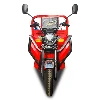
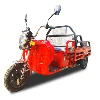
"Beep, beep, please reverse" – that familiar Chinese warning chime is now echoing across American farms, European old towns, and Southeast Asian markets. Once a humble workhorse for China's rural and urban streets, the electric tricycle has become an unexpected global sensation.
The Numbers Tell the Story
Customs data shows that in 2025, China exported over 26.7 million electric two‑wheelers, generating $6.83 billion in revenue. In the first quarter of 2026 alone, exports reached approximately 7.2 million units – a year‑on‑year jump of 68.2%.
Electric tricycles are growing even faster. In the major manufacturing hub of Xuzhou, Jiangsu Province, tricycle exports from January to April 2026 hit RMB 168 million (about $23 million), up 87.2% from the same period last year. Spare parts exports for tricycles also reached RMB 115 million.
The price gap is even more striking: a tricycle that sells for RMB 2,000–5,000 ($280–700) in China can fetch $3,000–6,000 in Western markets – two to eight times the domestic price. In Spain, high‑end models have even been listed for as much as RMB 160,000 ($22,000).
Why Is the World Snapping Up "Sanbengzi"?
First, the economics are hard to beat. With global fuel prices high, an electric tricycle costs only a few yuan per 100 kilometers. A Philippine dealer did the math: operating costs are just one‑tenth those of a petrol vehicle – the fuel savings in a single year can pay for a brand‑new tricycle.
Second, Chinese manufacturers have become experts in adapting to local needs. They no longer simply sell what they make – they make what the market wants. For rainy, congested Southeast Asia, they strengthen waterproofing, dustproofing, and shock absorption. For Europe's narrow historic streets, they design compact models that align with EU decarbonisation policies. For North American farms, they add hydraulic dumping systems and heavy‑duty frames for hauling.
Behind all this is China's unparalleled supply chain. Feng County in Jiangsu controls over 90% of the national tricycle parts market, and Wuxi has built a "one‑hour industrial circle" where everything from motors to frames is sourced within a 60‑kilometer radius. This ecosystem is nearly impossible to replicate abroad in the short term.
Challenges on the Horizon
Yet, the boom isn't without its pitfalls. Regulatory fragmentation remains a headache: the EU caps speed at 45 km/h, while Indonesia allows 70 km/h. Costly certifications like EEC and EPA raise the barrier to entry. The US has imposed additional tariffs, and the EU is rolling out its "battery passport" policy. Meanwhile, the rush of new exporters is starting to squeeze profit margins in Southeast Asia.
Looking Ahead
Industry leaders are already charting the course. Yadea has positioned electric tricycles as a "key emerging growth track", and Luyuan has shifted from "product export" to "capability export" and "ecosystem export".
To turn a short‑lived "order frenzy" into sustainable global success, the real opportunity lies in moving beyond selling products to delivering localised services, navigating compliance confidently, and avoiding a race to the bottom on price. These are the very challenges that separate capable, long‑term partners from the rest – and that's exactly where serious suppliers can shine.