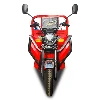
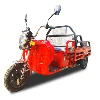
Through long-term practice in serving urban and rural transportation and agricultural production, users have accumulated a series of valuable experiences in using gasoline tricycles. These experiences stem from repeated verification under different working conditions, tasks, and management aspects. They cover vehicle selection and configuration, as well as operating habits, maintenance, and safety management, providing important guidance for improving efficiency and extending service life.
Regarding selection and configuration, experience indicates that the principle of "choosing according to need and appropriate redundancy" should be adhered to. Different operating scenarios have varying requirements for power, load capacity, and maneuverability. In environments with heavy loads or frequent inclines, twin-cylinder engines and large-size flatbed cargo boxes are preferable to ensure torque reserves and structural strength. However, in space-constrained areas such as streets, alleys, and field ridges, single-cylinder lightweight models are more advantageous due to their compact body and agile steering. The type of cargo box should also be chosen based on the characteristics of the actual load. For example, a flatbed structure is suitable for transporting bulk cargo, while bagged agricultural supplies should use sideboards with raised railings. Fresh produce or items requiring moisture protection can be fitted with tarpaulins or enclosed bodies to reduce damage and improve loading and unloading efficiency.
In terms of operation, experience emphasizes "combining stability and control, and anticipating ahead." Drivers should properly control the throttle and clutch when starting fully loaded and climbing hills to avoid engine overload or tire slippage. In complex road conditions, downshifting to increase torque in advance and maintaining a safe following distance are necessary. For vehicles converted for passenger use or special-purpose work, special attention should be paid to securing passengers and equipment to prevent accidents caused by bumpy driving. Long-term practice has also shown that a standardized shifting rhythm and proper idling warm-up can reduce mechanical wear and improve fuel efficiency.
Regarding maintenance, users have summarized the practice as "regular inspection and timely handling." The cleanliness of engine oil, fuel, and air filters directly affects engine performance and should be replaced or cleaned periodically. The sensitivity of the braking system and tire pressure need to be checked frequently to prevent brake weakness or tire blowout risks. When operating in dusty, humid environments, special attention should be paid to protecting the cooling system and electrical connections to prevent malfunctions due to poor heat dissipation or poor contact. Any unusual noises, vibrations, or power loss should be immediately addressed by stopping the machine and inspecting it to prevent minor issues from escalating into major damage.
Safety management experience focuses on "prevention first, full controllability." Before departure, ensure sufficient fluids and effective brakes, and never operate the vehicle with defects. While driving, adhere to speed limits and reduce speed in densely populated areas. Assess the ground load-bearing capacity and slope at the work site to prevent tipping under heavy loads. Vehicles not in use for extended periods should be properly sealed, with the fuel drained or anti-corrosion agents added to reduce rust and fuel line blockage.
In summary, these practical experiences form the foundation for the efficient, safe, and long-lasting operation of gasoline tricycles, providing valuable reference for users to optimize management, reduce costs, and ensure operational continuity.