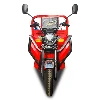
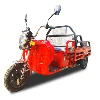
In the operation of urban and rural economies and societies, gasoline-powered tricycles, with their unique performance and wide applicability, have become an indispensable force in the grassroots transportation and livelihood security system. Their importance is not only reflected in the improved efficiency of material circulation, but also profoundly impacts the last mile of agricultural production, commercial services, and public governance.
From the perspective of agricultural production, gasoline-powered tricycles are the core link between the fields and the market. Their low-speed, high-torque fuel-powered characteristics allow them to reliably handle unpaved road conditions such as slopes and mud, efficiently delivering agricultural supplies such as fertilizers and seeds to the fields, and quickly distributing agricultural products such as grains, fruits, and vegetables to collection points. This significantly reduces the intensity of manual handling, directly shortens the production and sales cycle, and becomes a "mobile bridge" connecting small farmers to the large market.
In the field of urban and rural logistics, gasoline-powered tricycles, with their advantages of "flexibility and economy," solve the "last mile" problem. Compared to four-wheeled trucks, their compact size allows them to easily navigate streets and fields, and their convenient refueling eliminates reliance on charging infrastructure, making them particularly valuable in remote towns and mountainous areas. Whether for last-mile delivery, supermarket restocking, or short-haul transport of building materials, they ensure a stable supply of essential goods at low cost and with high adaptability.
In terms of public services, gasoline-powered tricycles also supplement grassroots governance. Modified sanitation sweepers and emergency repair vehicles can quickly respond to road cleaning and facility maintenance needs; in emergency situations, their mobility (refueling and going) makes them a reliable vehicle for transporting supplies, enhancing the timeliness and coverage of public services.
Furthermore, the widespread adoption of gasoline-powered tricycles has revitalized the grassroots economy. Their lower purchase and maintenance costs provide feasible transportation tools for individual farmers and small businesses, creating flexible employment opportunities in freight and delivery, promoting the formation of localized maintenance and service chains, and contributing to the micro-circulation of the rural economy.
It can be said that gasoline-powered tricycles, with their practical performance and functions, are deeply embedded in the fabric of grassroots production and life, becoming a pragmatic fulcrum for supporting urban-rural integration and ensuring people's well-being. Their importance will continue to grow with the increasing demand at the grassroots level.