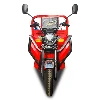
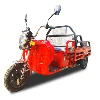
As an important tool for grassroots transportation and production, the stability of gasoline tricycle quality directly affects operational efficiency, safety, and service life. Therefore, establishing a scientific and rigorous quality control system, spanning the entire process from R&D and design, parts procurement, manufacturing, and final inspection, is the core guarantee for ensuring the continuous and reliable operation of the product under complex working conditions.
In the design phase, quality control begins with a thorough analysis of the operating environment and precise matching of performance parameters. Based on the terrain characteristics, load requirements, and climate zones of the target market, the engine displacement, torque curve, and suspension system stiffness parameters must be determined so that the power output and load-bearing structure are theoretically capable of handling slopes, mud, and unpaved roads. The frame design must undergo finite element analysis and actual vehicle load testing to ensure that the steel selection and welding processes meet torsional and fatigue strength requirements, avoiding early deformation or fracture due to structural defects.
Quality control in the parts procurement stage is the foundation for ensuring the consistency of the entire vehicle. Core assemblies such as engines, clutches, and transmissions should be sourced from suppliers with mature manufacturing and testing capabilities, and undergo rigorous incoming inspections, including performance testing, durability sampling, and verification of critical dimensions. Safety-related components such as tires, braking elements, and fuel lines must comply with relevant national standards or industry specifications to prevent substandard products from entering the assembly line. For vulnerable parts such as bearings and seals, a batch traceability mechanism should be established to ensure the stability of material composition and heat treatment processes.
The manufacturing process requires strengthened process discipline and process inspection. Welding processes should control current, voltage, and speed parameters to ensure uniform, full welds without incomplete welds or gaps. The painting process must implement rust removal, phosphating, and powder coating standards to improve corrosion resistance. During assembly, critical fit clearances (such as the clearance between the clutch release bearing and pressure plate, and the clearance between brake shoes and brake drum) must be performed according to the process card and verified item by item. After final assembly, the vehicle must undergo static testing (lights, instruments, brake pedal travel) and dynamic road testing (starting, acceleration, braking, steering) to ensure that all functional indicators meet design requirements.
Factory inspection and after-sales quality tracking constitute the last line of defense. Each vehicle should undergo full-item testing, including engine idling stability, exhaust emissions, braking distance, and body deformation monitoring under load. Only vehicles that pass this test can be labeled and shipped. After entering the market, a user feedback and quality information collection mechanism should be established. Root cause analysis should be conducted on frequently occurring malfunctions, and potential problems should be eliminated through design optimization or process improvement, forming a closed-loop quality improvement mechanism.
In summary, quality control of gasoline tricycles is a systematic project covering the entire life cycle. Only through the synergistic effect of precise design, superior component selection, standardized manufacturing, and rigorous inspection can the reliability and durability of the product be continuously improved, providing reliable equipment support for grassroots transportation.