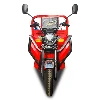
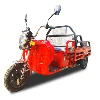
The performance of gasoline tricycles is highly consistent with their intended use, focusing on continuous power, load stability, maneuverability, and environmental adaptability, forming a comprehensive capability to handle diverse tasks in urban and rural areas. Their performance is not simply about pursuing high speed or extreme parameters, but rather optimizing for reliability, economy, and usability under actual working conditions, ensuring stable performance in various scenarios.
In terms of power performance, gasoline tricycles are generally equipped with single-cylinder or twin-cylinder four-stroke gasoline engines, with displacements mostly between 150cc and 300cc, featuring high torque output at low speeds. This characteristic allows the vehicle to start smoothly even when fully loaded and maintain sufficient traction on high-resistance road conditions such as slopes, gravel roads, and muddy surfaces. Compared to electric drive, fuel-powered tricycles exhibit higher range stability during cold starts, continuous operation, and long-distance transportation, reducing the uncertainty of refueling mid-journey and improving the efficiency of transportation plans.
Load capacity and stability are another pillar of performance. The three-wheeled structure achieves mechanical balance through front-wheel steering and rear dual-wheel load bearing. The frame, primarily constructed of welded steel, possesses excellent rigidity and torsional resistance, capable of withstanding frequent full loads and bumpy impacts. Depending on the application, the suspension system employs a combination of hydraulically damped front forks and leaf spring rear suspension, improving ride smoothness and heavy-load stability. Deep-tread tires enhance grip, effectively suppressing the risk of skidding and getting stuck on wet or uneven surfaces.
Handling performance emphasizes a balance between agility and safety. The compact overall size and moderate wheelbase facilitate turning and U-turns in narrow spaces such as streets, alleys, and field ridges. The braking system is primarily drum brakes, with some models supplemented by a handbrake or reinforced braking mechanisms, ensuring safety redundancy during hill starts and emergency braking. The driver enjoys a wide field of vision, and the ergonomic layout of the operating mechanisms reduces fatigue during long-term operation.
Environmental adaptability ensures all-weather, multi-regional operation. Air-cooled or simple water-cooled designs allow the engine to maintain a reasonable operating temperature even in dusty environments with large temperature differences; carburetor or electronic fuel injection systems have high tolerance for fuel quality, reducing malfunctions caused by fuel quality fluctuations. The lubrication and filtration systems are simple and durable, with long maintenance intervals, contributing to increased uptime.
Overall, the performance characteristics of gasoline tricycles lie in the organic combination of sufficient power reserves, reliable load-bearing capacity, agile handling, and broad environmental tolerance, forming practical efficiency for grassroots transportation and continuously supporting the stable operation of urban and rural logistics and agricultural production.