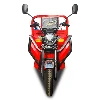
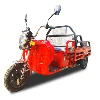
Gasoline tricycles, having long served urban and rural logistics, agricultural production, and short-distance passenger transport, have gradually developed a series of distinct characteristics, securing their stable position in the grassroots transportation system. These characteristics stem from their pragmatic structural design and targeted power configuration, enabling them to balance efficiency, economy, and reliability under complex working conditions.
Firstly, they offer strong adaptability to power performance. Gasoline tricycles typically use single-cylinder or twin-cylinder gasoline engines with displacements ranging from 150cc to 300cc. They possess low-speed, high-torque output characteristics, allowing for stable starts under full load and handling challenging road conditions such as slopes and dirt roads. Compared to pure electric tricycles, fuel-powered vehicles are less affected by changes in ambient temperature and load, resulting in more predictable range, making them particularly suitable for long-distance or variable road conditions.
Secondly, they offer a flexible balance of load capacity and space. The vehicle structure is based on a three-wheel layout, with the rear two wheels bearing the main load and the front wheels responsible for steering, forming a stable support system. The cargo box comes in various forms, including flatbed, sideboard, and simple box-type, and can be equipped with tarpaulins or railings as needed to meet the loading requirements of bulk goods, bagged items, and small equipment. The box size and wheelbase can be adjusted according to the usage scenario, maintaining good maneuverability in narrow streets and field roads.
Thirdly, the purchase and operating costs are relatively controllable. Gasoline tricycles have a mature structure, widely available spare parts, and simple maintenance procedures, with single maintenance costs lower than most four-wheeled motor vehicles. Refueling is convenient, and there is low dependence on infrastructure, giving them a significant advantage in areas with insufficient power grid coverage or inconvenient charging. For small and medium-sized operators and individual farmers with limited funds, their input-output ratio is highly attractive.
Fourthly, they exhibit outstanding environmental adaptability and durability. The frame is mostly welded steel, providing good rigidity and torsional resistance, capable of withstanding frequent full loads and bumpy impacts. The suspension and running gear are optimized for unpaved roads, and deep-tread tires enhance traction, reducing the risk of slippage and getting stuck. They maintain a high uptime rate even in dusty, wet, or hilly operating environments. Overall, gasoline-powered tricycles are characterized by reliable power, flexible load-bearing capacity, moderate cost, and strong environmental adaptability. They closely meet the actual needs of grassroots transportation and have become an indispensable functional vehicle in urban and rural economic activities.