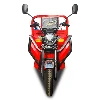
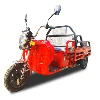
As the "heart" of a gasoline tricycle, the power system not only determines the vehicle's load-bearing capacity and driving performance but also directly affects its reliability and economy under complex working conditions. This system consists of modules such as the engine, fuel supply, ignition, and cooling system, all working in close coordination to achieve the goals of "high-efficiency output and stable durability," providing fundamental power for diverse transportation scenarios.
The engine is the power source. Mainstream models use single-cylinder or twin-cylinder four-stroke gasoline engines, with displacements ranging from 150cc to 300cc. Single-cylinder engines are compact and low-cost, suitable for light-load freight and short-distance passenger transport; twin-cylinder engines have less vibration and more torque reserves, and are often used in heavy-load or hilly scenarios. Air cooling remains the preferred choice for most models due to its ease of maintenance, while some high-end models introduce water cooling systems, using circulating fluid to reduce heat load and extend continuous operating time.
The fuel supply system is responsible for the precise ratio of fuel to air. Traditional carburetor engines rely on negative pressure for fuel intake, offering a simple structure but limited adaptability to various operating conditions. Electronic fuel injection (EFI) engines, through real-time adjustment of injection quantity and ignition timing by the ECU, significantly improve cold-start performance and fuel efficiency, and more easily meet current emission regulations regarding hydrocarbon and particulate matter limits.
The ignition system primarily uses capacitor discharge, supplemented by a contactless ignition module, ensuring stable spark intensity and reducing carbon buildup. The starting mechanism integrates both pedal and electric start modes; the former allows for emergency ignition in the absence of electricity, while the latter enhances convenience for daily operation.
Cooling and lubrication systems ensure long-term operational reliability. Air-cooled engines rely on fins to increase surface area, and some are equipped with air ducts to enhance airflow; water-cooled engines maintain a constant cylinder temperature through a water pump and thermostat. Lubrication primarily employs a combination of splash and pressure methods, with the oil pump ensuring sufficient oil film thickness on critical friction surfaces, extending engine overhaul intervals.
In summary, the power system of gasoline tricycles is designed to be "sufficient, durable, and easy to maintain." Through mature technology and appropriate upgrades, a balance is achieved between cost and performance, enabling it to maintain stable output in diverse environments such as rural dirt roads, urban alleyways, and simple construction sites, and continue to play its role as a grassroots transportation hub.