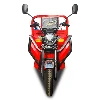
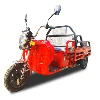
Driven by policy controls, consumption upgrades, and changing global travel demands, the electric tricycle industry is moving away from rudimentary assembly and low-price competition, shifting towards standardization and high quality. Domestic regulations are continuously improving, products are being included in motor vehicle announcement management, and CCC certification and complete factory documentation have become prerequisites for market entry and registration. Local governments are continuously eliminating non-standard assembled vehicles, and small workshops lacking production qualifications are being phased out. Industry resources are increasingly concentrating on leading brands with compliant qualifications, and compliant production has become a fundamental prerequisite for companies to survive in the market.
Power technology iteration is key to product upgrades. Lithium batteries, with their advantages of lightweight design, superior safety, and longer range, continue to penetrate the market, gradually replacing lead-acid batteries as the main configuration for mid-to-high-end models. Lead-acid batteries are now only found in low-end entry-level products. The widespread adoption of supporting BMS battery management systems and permanent magnet synchronous motors effectively optimizes vehicle energy consumption and safety. Battery swapping models for commercial vehicles are also gradually being implemented in towns and counties, further improving the user experience.
As users demand a higher level of driving experience, the pace of upgrades in vehicle intelligence and comfort is accelerating. Features originally found in passenger cars, such as reversing cameras, parking assist, large in-vehicle screens, and remote anti-theft systems, are increasingly being incorporated into three-wheeled vehicles. Manufacturers are also optimizing human-machine interaction to suit the needs of elderly consumers, simplifying operations and adding emergency functions. Meanwhile, market segmentation is becoming increasingly clear, with manufacturers developing differentiated models for various usage environments, such as family commuting, rural transportation, and sightseeing, breaking away from the previous homogenization of single-product offerings. Production is also upgrading, with automated production lines, integrated stamped frames, and lightweight new materials becoming more widespread. Modular design not only improves overall vehicle quality but also facilitates parts maintenance and on-site assembly overseas.
The domestic market is gradually entering a phase of stock optimization, while overseas markets are becoming an important source of growth for the industry. Leveraging their cost-effectiveness, demand for domestically produced three-wheeled vehicles is steadily increasing in Africa, Southeast Asia, and Central Asia. Many companies have obtained relevant product certifications in Europe and the United States, entering the high-end leisure transportation market. To avoid import tariffs, leading companies are successively establishing assembly plants overseas, making globalization a crucial direction for the industry's long-term development. In the long run, competition based on comprehensive strengths in compliance, technology, niche products, and overseas expansion will be the main theme of future industry development.