1. The Earliest Hand-Cranked Prototype (1680)
The world's first recorded three-wheeled human-powered vehicle was created in 1680 by Stephan Farffler, a disabled German watchmaker from Nuremberg. Confined by mobility impairment, Farffler applied precision gear-making skills to build a wooden trike driven by hand cranks and gear sets, without foot pedals. Though slow and only for personal mobility, it established the foundational three-wheel layout and became the ancestral model of all later tricycles.
Before pedal propulsion emerged, another landmark three-wheeled machine arrived in 1769: Nicolas-Joseph Cugnot's steam-powered artillery tractor Fardier à vapeur in France, widely recognized as the first self-propelled land vehicle. This heavy steam tricycle reached merely 3 km/h, unstable and hard to steer, yet pioneered motorized three-wheel transport decades before gasoline engines.
2. Birth of Pedal Tricycles & Official Naming (1789–1830s)
In 1789, French inventors Blanchard and Maguier rolled out the first practical pedal-driven tricycle. The Paris newspaper Journal de Paris formally coined the term "tricycle" (tri- for three, cycle for wheeled vehicle) to distinguish it from two-wheeled bicycles, solidifying the vehicle's official English name still used today.
Britain quickly caught up in trike innovation. Denis Johnson filed England's first tricycle patent in 1818, optimizing frame structure for smoother riding on rough European roads. In the 1830s, Scottish blacksmith Kirkpatrick Macmillan upgraded pedal transmission, attaching pedals directly to wheel hubs to boost propulsion efficiency, laying technical groundwork for mass-produced pedal tricycles.
3. Golden Age of British Tricycle Manufacturing (1870s–1890s)
The late 19th century marked tricycles' first industrial boom, centered in Coventry, Britain's bicycle manufacturing hub. The pivotal innovator was James Starley, known as the "father of the modern bicycle".
1876: Starley launched the Coventry Lever Tricycle, with two small steering wheels on the right and one large driving wheel on the left, powered by hand levers. It ignited a nationwide tricycling fad among middle-class British adults, especially women, as tricycles offered far better balance than high-wheel penny-farthing bicycles.
1877: Starley released the Rotary chain-drive tricycle, introducing chain transmission to replace clumsy lever systems, drastically improving speed and operability. Double-chain drives soon followed to fix uneven traction flaws of single-side drive models.
By the 1880s, wooden children's tricycles became mainstream toys across Europe and North America. Meanwhile, electric tricycles debuted: in 1881, British engineers William Ayrton and John Perry built the earliest electric trike, fitted with a primitive battery and front drive wheels, proving electric power viable for three-wheel transport. Steam tricycles also saw commercial attempts-Belgian inventor Charles Palmers de Groote's 1877 steam trike hit 10 km/h for short-distance passenger transport.
4. Internal Combustion Engine Tricycles & Global Popularization (1890s–1940s)
The rise of gasoline internal combustion engines reshaped motorized tricycles. Most famously, Karl Benz's 1886 Benz Patent-Motorwagen was a three-wheeled gasoline vehicle, often categorized as a motor tricycle, which kickstarted the global automobile industry on a three-wheel chassis.
From the 1900s to World War II, motor tricycles split into two major branches:
Light passenger trikes: Small gasoline trikes prevailed in European towns and Asian port cities for taxi and courier work, cheaper and more maneuverable than four-wheel cars.
Cargo tricycles: Reinforced heavy-duty trikes handled farm produce, factory goods and military supplies, favored for their low production cost and strong load capacity.
Human-powered rickshaw-style tricycles also spread globally in this era, becoming iconic public transit in Southeast Asia, India and East Asian cities.
5. Diversified Modern Tricycles (1950s–Present)
Post-WWII industrialization and new energy technology drove tricycles into segmented, multi-scenario applications:
5.1 Fuel-powered utility tricycles
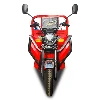
Mass-produced internal combustion cargo trikes dominated rural and suburban logistics worldwide, widely adopted in China, Southeast Asia, Africa and Latin America for agricultural hauling and small trade delivery due to low maintenance and excellent terrain adaptability.
5.2 Electric tricycles (fastest-growing segment)
Since the 1990s, battery-powered electric tricycles surged:
Elderly mobility trikes with low speed, stable frames for daily short trips;
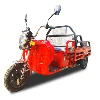
Electric cargo trikes for urban express delivery and street vending;
High-performance electric recreational trikes for outdoor sports in Europe and America. The 1881 Ayrton-Perry prototype's electric blueprint finally achieved large-scale commercialization with lithium battery upgrades after 2010.
5.3 Specialized & recreational tricycles
Adaptive tricycles for disabled athletes and rehabilitation therapy;
Tourist passenger trikes for sightseeing in European historic districts;
High-end motor trikes from brands like Harley-Davidson for leisure riding, blending motorcycle power with three-wheel stability.
Conclusion
From Farffler's hand-cranked wooden mobility aid in 1680 to today's smart electric trikes, tricycles have never been overshadowed by bicycles, motorcycles or cars. Their core advantage-superior stability at low to medium speeds-keeps them irreplaceable in public transit, logistics, rehabilitation and recreation. As global low-carbon transport advances, electric tricycles continue to write new chapters in this centuries-long vehicle evolution story.