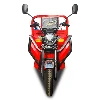
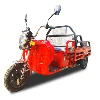
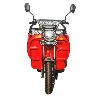
For gasoline tricycles intended for road operation, the inspection should cover uniqueness verification, appearance and safety protection, dynamic and on-line performance, emissions and braking, and report issuance, ensuring that the vehicle meets the requirements of GB 7258 Technical Conditions for Safe Operation of Motor Vehicles and related inspection standards. The process should be clear, the nodes controllable, and the results traceable.
I. Inspection Preparation and Uniqueness Verification
• Document Verification: Bring the vehicle registration certificate, vehicle license, compulsory traffic accident liability insurance certificate, and the identity certificate of the person submitting the vehicle for inspection; confirm that the Vehicle Identification Number (VIN) and engine number are consistent with those on the certificate, and that the vehicle license plate, color, brand, and model match the records.
• Vehicle Condition: Clean the vehicle; ensure the spare tire, on-board tools, and fire extinguisher, etc., are complete; tire pressure is set according to the nameplate value; lights and horn are functioning normally.
• Uniqueness Verification: Verify the license plate number, vehicle type, brand/model, color, engine number, VIN, and main characteristics and technical parameters, and retain rubbings or video records as evidence for subsequent inspection and traceability.
II. Exterior Inspection and Safety Protection
• Body and Chassis Components: Inspect the exterior of the vehicle, bumpers, engine compartment, and wheels for deformation, cracks, or rust; ensure key chassis components are securely fastened, without leaks or interference.
• Lighting and Electrical: Ensure headlights, turn signals, brake lights, license plate lights, and instruments/indicators are complete and functional; wiring harnesses are securely fixed and well-insulated.
• Safety Protection: Confirm rearview mirrors/side mirrors are intact, and windshield and windows are undamaged; for driverless three-wheeled vehicles, check that the front safety frame is securely installed, without obvious deformation or welding defects, meeting structural strength and installation height requirements, and providing effective protection for occupants.
III. Dynamic Inspection and In-Line Performance Testing
• Dynamic Inspection (Low-Speed Testing): Qualitatively inspect the steering system, clutch, transmission, drivetrain, and braking system at low speeds, paying attention to deviation, abnormal noises, vibrations, and the linearity of braking force transmission.
• On-line performance (testing line): Braking performance (braking force, coordination time, parking braking force), headlights (high/low beam intensity and illumination position), etc., are tested according to equipment specifications. For two- and three-wheeled vehicles, on-line tests are conducted using a combination of manual labor and specialized tooling to ensure objective and verifiable data.
IV. Emission Testing and Result Processing
• Emission Measurement: Gasoline engines are tested according to GB 18285 Spark-ignition Engine Automobile Dual Idle Speed Method, measuring CO, HC volume fractions, and excess air coefficient λ. Vehicles are fully preheated and operating stably before testing, and sampling and instrument calibration comply with regulations.
• Acceptance Judgment and Re-inspection: An inspection report and record are generated. Corrective action suggestions are issued for non-compliant items, and a re-inspection is applied for after repair. Upon successful completion, the corresponding inspection certificate/certificate is issued, and the data is archived.
V. Operational Inspection and Special Focus Areas
• Periodic Inspection of In-Use Vehicles: Conducted regularly according to the requirements for in-use motor vehicle inspection, focusing on key safety items such as uniqueness, braking, lighting, and steering to ensure continued compliance with national safety technical standards such as GB 7258.
• Special Safety Checks: Conduct safety checks on the fuel system, confirming the fuel tank cap's sealing and the safe distance between the fuel filler neck, vent, and electrical components; check the tightness and vibration resistance to reduce the risk of leakage and fire.
• Consistency of Test Conditions: When performance or fuel consumption tests are involved, control the test environment, instrument accuracy, and vehicle condition according to GB/T 23931-2021 to ensure the comparability and validity of test results.