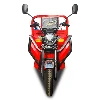
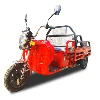
Africa's rural transport environment and market demand make full-floating rear axles an essential standard configuration for all export cargo tricycles. Here are the core reasons:
Adapt to overloading habits of local users Most African farmers and small vendors rely on one tricycle to carry all farm produce, building materials and daily goods. Overloading is common. A full-floating rear axle separates load-bearing and power transmission: the axle tube bears the whole vehicle and cargo weight, while the half-shaft only transmits power. It avoids broken half-shafts, twisted axles and differential damage caused by heavy loads, which frequently happen with ordinary semi-floating axles.
Fit rough rural road conditions Most areas in Africa lack paved highways. Dirt roads, muddy slopes and bumpy mountain tracks put continuous impact pressure on the rear axle. Full-floating structure with thickened ball cast iron housing and reinforced bearings delivers stronger shock resistance and durability. It can run stably on uneven roads without early axle failure.
Cut local maintenance costs Spare parts supply in remote African villages is limited, and vehicle repair fees are expensive. Full-floating rear axles have a far longer service life and fewer breakdowns. Local operators do not need frequent replacement of axle core parts, greatly lowering long-term operation costs for small business owners.
Match multi-scenario usage demands African tricycles serve multiple purposes: agricultural hauling, street vendor delivery, short-distance passenger taxi and construction material transport. The full-floating design supports versatile heavy-duty use without structural deformation, meeting the all-in-one transport needs of grassroots users.
Comply with local distributor profit logic Local dealers prefer durable, low-failure tricycles to reduce after-sales complaints. Equipping full-floating rear axles becomes a core selling point to win market trust. For Chinese manufacturers, this configuration has turned into a standard basic upgrade to match African market positioning, instead of an optional extra accessory.
In summary, heavy load demand, poor road infrastructure and high maintenance costs locally jointly push full-floating heavy-duty rear axles to become the mandatory standard for tricycles exported to Africa.