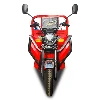
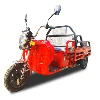
From the 136th Canton Fair to Central Asia, South Asia and Africa, the Chongqing brand builds to local conditions - "one market, one vehicle"
CHONGQING, China, November 10, 2026 - Electric three-wheelers are becoming one of the more durable calling cards of Chinese manufacturing abroad. A CCTV report in October described the vehicles - known colloquially as sanlunche, or "three-wheelers" - as a crowd-puller at the Canton Fair, prized by overseas buyers for their agility, durability and low cost, and opening a new export channel for small and mid-sized manufacturers. The same report noted a shift in approach: companies are iterating for specific markets, adjusting body dimensions, powertrain modes, range, safety equipment and styling to fit local conditions.
HANXUE HANMA (汗血悍马), a three-wheeler brand based in Chongqing, has been working that route for more than a decade. Its vehicles are exported to Iran, Uzbekistan, Tajikistan, Pakistan, India, Bangladesh, Thailand, Cambodia, South Africa, Turkey and other markets, serving customers in more than 40 countries and regions. In October, the brand's parent, Chongqing Hanxue Ma Vehicle Industry Co., Ltd., was named to the Chongqing municipal government's 2026 list of Innovative SMEs.
The economics of the last mile
In plantations across Southeast Asia, wholesale markets in Central Asia and town centers in Africa, electric three-wheelers carrying several hundred kilograms - narrow enough for alleyways, far cheaper to buy and run than a pickup - are absorbing a large share of last-mile transport work.
Buyer requirements have moved on. Exhibitors at the Canton Fair said overseas purchasers no longer ask simply whether a vehicle runs, but whether it suits their roads: stronger chassis and suspension where surfaces are poor, better thermal management in hot climates, narrower bodies and tighter turning circles where streets are narrow.
That demand profile plays to the strengths of China's three-wheeler supply chain - complete, fast to re-engineer, and cost-controlled at the unit level. But being able to build a vehicle is not the same as being able to sell one. The dividing line is whether a manufacturer is willing to re-calibrate for each market rather than ship a domestic bestseller as-is.
"One market, one vehicle"
Shipping a proven domestic model straight to port is common among smaller exporters, and it often fails abroad. Steep gradients, habitual overloading, high temperatures, poor road surfaces and unstable grid voltage can each take years off a vehicle's service life.
HANXUE HANMA's answer is what it calls "one market, one vehicle." Publicly available company information shows a range spanning cargo, passenger, construction and special-purpose three- and four-wheelers, with combustion powertrains from 150 cc to 800 cc and electric drive systems from 800 W to 5 kW.
"We tailor products one-to-one for the operating conditions of each region, so that our customers' products gain stronger viability and competitiveness," the company has said in public remarks.
For electric models the differences are concrete: mountainous markets need more low-end torque and climbing ability; flatland cargo work rewards range and payload efficiency; passenger applications add demands on comfort and braking safety. At its August 2026 product launch, the company introduced three lines - "Dual-Power," mountain-terrain models and an all-new new-energy vehicle - with mountain and heavy-load use cases as a common thread.
Homologation as an export asset
Access to an export market begins with whether a vehicle can legally take to the road. HANXUE HANMA holds a Class-I production qualification under the Ministry of Industry and Information Technology (MIIT) manufacturing catalogue - the basis for entering China's type-approval system and, from there, pursuing overseas certification.
Several of its electric three-wheeled motorcycles appear in the 409th batch of the MIIT Announcement of Road Motor Vehicle Manufacturers and Products. The cargo model HX1500DZH measures 2,650 × 980 × 1,175 mm, with a kerb weight of 160 kg, a rated payload of 195 kg and a wheelbase of 1,875 mm. The passenger model HX1500DZK seats three, with a kerb weight of 178 kg and a wheelbase of 1,980 mm. Both use a 1.5 kW motor supplied by Xuzhou Jusong Electromechanical and are battery-electric, with a design top speed of 51 km/h. A larger cargo variant with a rated payload of 350 kg was also reported in the same batch.
Cargo and passenger body styles, large and small footprints, and alternative wheelbases give a single brand the means to match different road-use rules, street widths and load-carrying habits - the product foundation for customized export.
From trade shows to dealer networks
The brand's export path started at exhibitions. In October 2024 it showed three-wheeled motorcycles at the 136th session of the China Import and Export Fair (Canton Fair); in September 2026 it appeared at the 24th China International Motorcycle Trade Exhibition (CIMAMotor), displaying cargo three-wheelers with dump-bed configurations and meeting dealers and industry partners on specifications, distribution and customization requests.
Over a decade, its footprint has extended from Uzbekistan and Tajikistan in Central Asia to Pakistan, India and Bangladesh in South Asia, Thailand and Cambodia in Southeast Asia, Iran and Turkey in the Middle East, and South Africa. Local press, reporting its Innovative SME designation, described the company as "known overseas under the HANXUE HANMA brand."
The next leg: certification, service, localization
Exporting is not all tailwinds. Type-approval regimes, voltage and charging standards, tariffs and rules of origin differ by market; spare-parts supply lines are long and response times slow, testing dealer management. Overseas customers are also less forgiving on consistency - a quality problem in one batch costs far more to fix than it would at home.
The company says it will keep refining its products, invest in technology and improve build quality, while working with distribution partners to develop markets. Industry observers argue that the competitive edge for Chinese electric three-wheelers is shifting from price alone to a combination of price, customization and service - and that the manufacturers who localize in finer detail are the ones most likely to hold their ground in the next round.
Outlook
From a workshop in Jiangjin, Chongqing, to a wholesale market in Central Asia, the journey of a single electric three-wheeler traces the wider path of Chinese short-haul transport equipment going abroad. As emerging markets keep looking for low-cost, low-emission ways to move goods, smaller manufacturers with genuine customization capability are reaching markets that were previously out of range.
About HANXUE HANMA
Founded in December 2014 and headquartered in Zone B of Luohuang Industrial Park, Jiangjin District, Chongqing, Chongqing Hanxue Ma Vehicle Industry Co., Ltd. (重庆汗血马车业有限公司) develops, manufactures and sells HANXUE HANMA-branded three-wheelers. The company holds a Class-I production qualification under the MIIT catalogue and offers fuel- and electric-powered cargo, passenger, construction and special-purpose three- and four-wheel vehicles, exported to more than 40 countries and regions. Website: cqhxhm.com