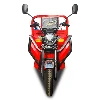
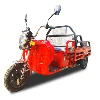
The on-road operation of three-wheelers is a key scenario for industry governance, covering personal use, cargo transportation, short-distance convenient services and other scenarios. All three-wheeler drivers and operation entities shall strictly abide by traffic laws, regulations and industry management policies, standardize behaviors including road driving, passenger carrying, cargo loading and vehicle parking, eliminate traffic violations and illegal operation chaos, and ensure road traffic safety and orderly industrial operation.
In terms of basic on-road compliance, all three-wheelers on the road must complete official registration and license plating. Motorized three-wheeled motorcycles shall purchase compulsory traffic insurance, obtain legal vehicle licenses, and be driven by holders of Class D driving licenses; low-speed non-motor three-wheelers must complete registration with traffic management departments. Unlicensed, unregistered, scrapped, assembled and non-standard vehicles are prohibited from road travel. Vehicles on the road must maintain their original compliant state, without privately refitted widened, heightened and speed-increased devices. The vehicle's appearance, structure and parameters shall be consistent with registered information, and illegally refitted vehicles shall be rectified and restored to the original state before road access. Meanwhile, drivers shall comply with safety protection regulations, wear safety helmets during driving, and avoid dangerous driving behaviors.
In terms of passenger and cargo operation specifications, the industry clearly defines the usage attributes of cargo and passenger vehicles and prohibits cross-scenario illegal operation. Cargo three-wheelers are strictly forbidden to illegally carry passengers and overload passengers, and are only allowed for cargo transportation; mixed passenger and cargo carrying, as well as overloaded cargo transportation are prohibited. Passenger three-wheelers shall strictly comply with the approved passenger capacity, avoid overloading and illegal carrying of minors and excess personnel, and refrain from privately adding passenger seats and refitting carriages for passenger operation. For short-distance urban and rural service three-wheelers, unlicensed commercial passenger-carrying and fare-charging operation are prohibited to avoid penalties for illegal operation.
In terms of road traffic and parking specifications, three-wheeler drivers shall strictly abide by traffic rules, drive in designated lanes, and avoid running red lights, reversing, random lane changing, speeding, occupying motor vehicle lanes and illegal road crossing. Vehicle parking behaviors shall be standardized; illegal parking and occupation of main roads, fire exits, sidewalks and key road intersections are prohibited. Urban and rural mobile operating three-wheelers shall comply with local urban management regulations, park and operate in designated areas, and avoid road occupation operation that affects traffic and urban appearance.
In terms of industry self-discipline and safe operation, three-wheeler practitioners shall actively learn the latest industry management policies and traffic regulations, cooperate with regular rectification work carried out by traffic management, urban management and market supervision departments, and take initiative to correct irregular operation behaviors. In daily operation, practitioners shall regularly inspect and maintain core vehicle components including braking systems, lighting equipment, batteries and tires, eliminate potential safety hazards, and prevent driving faulty vehicles. Meanwhile, practitioners shall establish the concepts of safe and compliant operation, abandon fluke mentality, avoid repeated illegal violations, jointly create a safe, orderly and standardized terminal operation environment for the three-wheeler industry, and promote the sustainable and healthy development of the industry.