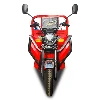
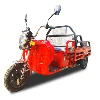
The three-wheeler sales link acts as a key hub connecting production and end users. The business behaviors of sales merchants directly affect market compliance levels and consumer rights and interests. Formal sales entities in the industry shall adhere to the bottom line of integrity and compliant operation, strictly abide by market supervision regulations, eliminate irregular sales, illegal refitting, false promotion and other chaos, and standardize the order of the terminal circulation market.
In terms of sales compliance, all sales stores are prohibited from selling three-wheelers without 3C certification and MIIT announcement certification, as well as assembled, refurbished, scrapped and over-standard non-standard vehicles, and shall resolutely put an end to shoddy goods and selling used products as new ones. All sold vehicles must be fully documented, complete with official product certificates, manuals and warranty documents to ensure legal registration, license plating and road access. Meanwhile, sales personnel shall strictly distinguish between electric three-wheeled motorcycles and low-speed non-motor three-wheelers, actively inform consumers of vehicle classification, registration requirements, driving license qualifications and insurance purchase rules, and avoid deliberately confusing vehicle types, concealing compliance problems and misleading consumers to purchase non-standard vehicles.
In terms of refitting and installation management, sales stores shall strictly abide by industry prohibitions and shall not conduct any illegal vehicle refitting and installation services, which constitute the core compliance requirement for the sales sector. It is strictly forbidden to widen frames, lengthen carriages, refit guardrails, install over-width canopies and external facilities, remove original speed limiters, replace high-power motors and batteries, decode and increase speed, and modify circuit systems that affect vehicle safety performance. For the installation of compliant safety devices such as protective guardrails, stores shall inform users to go through filing procedures with traffic management departments in advance, and private refitting and construction by stores are prohibited to avoid potential safety hazards and penalty risks caused by illegally refitted vehicles on the road.
In terms of integrity service and after-sales standardization, sales merchants shall fully protect consumers' right to know and after-sales rights and interests, truthfully introduce vehicle performance, parameters, applicable scenarios and traffic restriction regulations, and refrain from exaggerating vehicle functions and falsely promoting indicators such as endurance, load capacity and speed. They shall clarify the scope and term of vehicle warranty, standardize after-sales maintenance services, and avoid shifting responsibilities and refusing after-sales services for defective vehicles. In addition, merchants shall establish sales ledgers to register and retain vehicle sales and customer information, cooperate with regulatory authorities in traceability inspections, take the initiative to announce compliance business commitments, and accept industry and public supervision.
In terms of industry self-discipline, sales merchants shall consciously abandon undesirable business behaviors such as low-price competition, malicious dumping and bundled sales, refrain from selling unqualified and scrapped assembled vehicles, actively participate in special industry rectification actions, and take initiative to correct irregular business behaviors. They shall adhere to the bottom line of legal operation, jointly maintain a fair, transparent and compliant three-wheeler sales market, and promote the standardized and long-term healthy development of the industry.