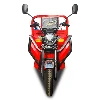
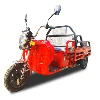
In the three-wheeled motorcycle manufacturing sector, the molding process, as a core production link, directly impacts product performance, durability, and market competitiveness. With the industry's increasing demand for lightweight and high-strength materials, the molding process for gasoline tricycles is iterating towards precision and intelligence, becoming a key support for promoting high-quality industrial development.
Currently, the mainstream molding process centers on the combination of sheet metal stamping and welding. The frame, as the vehicle's skeleton, is mostly formed by continuous stamping of high-strength steel plates using multi-station presses. Precise control of die clearance and blank holder force ensures that the dimensional tolerances of key components such as longitudinal beams and crossbeams are ≤0.5mm, fundamentally improving structural torsional resistance. For complex curved surface components such as the body and body panels, some companies have introduced CNC progressive forming technology. By applying pressure point by point instead of traditional integral molding, this reduces die development costs and enables flexible manufacturing of irregularly shaped structures, adapting to diverse vehicle design requirements.
Innovations in welding processes focus on "strength" and "consistency." In addition to retaining the basic application of resistance spot welding, laser-MIG hybrid welding is being gradually promoted in key stress-bearing parts (such as main frame nodes). Utilizing the high energy density of laser deep penetration welding to achieve metallurgical bonding of the base materials, combined with arc filler wire to optimize weld formation, the joint strength is increased by more than 20% compared to traditional processes. Simultaneously, the adoption rate of robotic welding units continues to increase. Through visual positioning and path planning technology, welding repeatability accuracy is controlled within ±0.1mm, effectively reducing structural hazards caused by human error.
It is worth noting that balancing environmental protection and efficiency has become a new direction for process optimization. The application of water-based protective coatings replaces some solvent-based coating processes, and combined with electrophoretic pretreatment technology, VOC emissions are reduced while ensuring corrosion resistance. Meanwhile, the pilot application of thermoforming processes in localized reinforced parts achieves the lightweight goal of "thinning and thickening" through austenite-to-martensite phase transformation strengthening.
The continuous improvement of forming processes not only solidifies the quality foundation of gasoline tricycles but also responds to the market's diverse expectations for safety, reliability, and environmental friendliness through technological innovation, injecting lasting momentum into the industry's advancement.