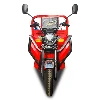
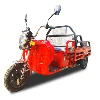
As an important tool for basic transportation and operations, the operating condition and lifespan of gasoline tricycles largely depend on the standardization of daily maintenance. Scientific maintenance not only reduces unexpected breakdowns but also maintains good power performance and fuel economy, providing a solid guarantee for continuous and efficient operation. Daily maintenance should cover aspects such as pre-trip inspection, in-operation monitoring, downtime maintenance, and long-term storage, forming a systematic maintenance habit.
The routine pre-trip inspection is the first line of defense in maintenance. Special attention should be paid to checking whether the fuel and engine oil levels are within the normal range. Insufficient fuel will affect range, and too little engine oil will accelerate wear on the friction pairs. The coolant level and water pipe connections must be checked for leaks to prevent engine overheating. The braking system should be tested for pedal travel and braking force to ensure that drum or disc brakes are sensitive and reliable. Tires should be checked to ensure the air pressure is within the standard range and inspected for cuts, bulges, or embedded foreign objects in the tread. Insufficient air pressure will increase rolling resistance and fuel consumption, while tire damage may lead to a blowout risk. The functions of lights, horn, and dashboard should be verified one by one to ensure clear driving information and effective warnings.
During operation, it is necessary to maintain a dynamic awareness of the vehicle's status. Pay attention to whether the engine runs smoothly; if abnormal noises, knocking, or vibrations occur, stop and inspect the vehicle immediately in a safe location. Observe the exhaust color and smell; black smoke may indicate an overly rich air-fuel mixture or a clogged air filter, blue smoke is often a sign of oil burning, and white smoke suggests water in the fuel or a leak in the cooling system. When driving under heavy load or on slopes, avoid prolonged low-speed, high-load operation to prevent accelerated carbon buildup and overheating of the engine.
Post-operation maintenance focuses on cleaning and maintenance of key components. After operation, promptly clean the cargo box and chassis of any mud and crop residue to prevent the long-term accumulation of corrosive substances. If the air filter is washable, remove it and gently tap or blow it clean with low-pressure airflow. In dusty environments, shorten the cleaning cycle to ensure clean intake air and combustion efficiency. The fuel filter should be replaced periodically to prevent impurities from entering the carburetor or electronic fuel injection system and affecting fuel supply stability. Chains and drive belts should be inspected for tension and wear, and lubricated or adjusted as needed to prevent slippage or breakage.
Proper care during long-term storage is crucial. Park in a dry, well-ventilated area, using supports to reduce tire pressure and deformation. Fill the fuel tank to the maximum capacity and add an appropriate amount of corrosion inhibitor, or drain the fuel lines to prevent gum buildup. Disconnect the negative terminal of the battery or charge it periodically to avoid damage from depletion. Apply rust-preventive oil to exposed metal parts to reduce the risk of corrosion in humid environments. Before restarting, check the fluids, electrical system, and braking system, and replace filters as needed to ensure performance is restored.
In short, daily maintenance of gasoline tricycles is a meticulous task throughout their entire lifespan. Through standardized inspections, timely cleaning, and preventative maintenance, uptime can be significantly improved, failure rates reduced, and service life effectively extended, providing continuous and reliable equipment support for grassroots transportation and operations.