- HANXUEHANMA Releases Practical Guide to Electrifying Urban Logistics in Africa
【August 6, 2026, Chongqing, China】As urbanization accelerates across Africa and e-commerce, fresh food delivery and local trade boom, the "last mile" has become a critical bottleneck for economic vitality. Finding a transport solution that balances cost, efficiency and environmental sustainability amidst complex road conditions and uneven energy infrastructure is a common challenge across the continent. Addressing this need, Chinese new-energy electric vehicle enterprise HANXUEHANMA today officially released its "Practical Guide to the Rational Use of Electric Tricycles for Africa's Last Mile." Drawing on extensive on-the-ground operating experience in multiple African countries, the guide offers comprehensive advice covering vehicle selection, energy replenishment and full-lifecycle maintenance.
The "African Challenge" of the Last Mile
Traffic congestion in African cities and the unpaved roads connecting urban and rural areas place heavy burdens on conventional petrol motorcycles and mini-trucks, resulting in high fuel consumption, frequent breakdowns and serious pollution. Meanwhile, the daily delivery of tens of millions of parcels, agricultural produce and daily necessities across sub-Saharan Africa calls for a vehicle with strong cargo capacity, low acquisition and operating costs, and no reliance on expensive fuel. In this context, electric tricycles - with zero emissions, low noise and strong adaptability for modification - are increasingly seen as a breakthrough solution.
"An electric tricycle is not simply a traditional three-wheeler fitted with a motor and battery. It must be deeply integrated with real-world African usage scenarios," said HANXUEHANMA's Africa Market Director in the guide. "The prerequisite for rational use is, first of all, choosing the right vehicle."
Key Principles for Rational Use
Based on long-term road tests in cities such as Lagos, Nigeria and Nairobi, Kenya, HANXUEHANMA has distilled the core principles of rational use into the following key aspects.
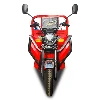
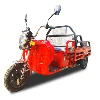
Scenario-based precise vehicle selection. The guide stresses that there is no one-size-fits-all model. For urban supermarket distribution, enclosed cargo-box models are recommended to protect goods. For agricultural produce collection in peri-urban areas, flatbed cargo designs with reinforced suspension are advised. For hilly terrain, high-torque motors and high-grip tires are essential. To meet these demands, HANXUEHANMA has launched its "African Lion" series of electric tricycles for the African market. Equipped with a 72V large-capacity lithium iron phosphate battery and an intelligent temperature control system, the series delivers a range exceeding 100 kilometers on a single charge and a rated load capacity of up to 800 kilograms, covering the vast majority of end-delivery cargo needs.
Decentralized energy replenishment. Given the unstable power grids in parts of Africa, rational use must go beyond the mindset of "finding a socket to charge." HANXUEHANMA proposes a "solar micro-grid + mobile battery swapping" model. By leveraging Africa's abundant sunshine, off-grid solar charging cabinets are deployed at delivery stations, while vehicles are equipped with portable quick-swap battery packs. Drivers can replenish energy during loading and unloading breaks, completely eliminating range anxiety.
Compliant operation and inclusive finance. The popularization of electric tricycles cannot be separated from road access rights and affordability. The guide recommends that operators actively communicate with municipal authorities to promote legal registration of electric tricycles, while also introducing battery leasing and lease-to-own models. HANXUEHANMA is exploring "daily battery rental with vehicle instalment purchase" schemes with local partners, aiming to keep a driver's daily energy cost below one-third of that of a conventional fuel vehicle, enabling micro-entrepreneurs to truly afford the vehicles and earn a living.
A Long-term Commitment to Africa
Headquartered in Chongqing, China, HANXUEHANMA is a global enterprise specializing in the R&D and manufacturing of new-energy short-distance transport vehicles. The brand name, inspired by the legendary stamina and speed of the Akhal-Teke horse, symbolizes the robust performance of its products in harsh environments. The company has already completed adaptation tests in West and East Africa and plans to establish an assembly base in Tanzania, using localized production to drive employment and technology transfer.
"In Africa's last mile, the rational use of electric tricycles is not merely a business choice - it is a transport revolution for green and inclusive growth," HANXUEHANMA stated. Moving forward, the company will continue to deliver operational methodologies based on data and real-world feedback, enabling electric tricycles to become the most dynamic cells in the capillary network of Africa's urban logistics.
About HANXUEHANMA
HANXUEHANMA is a new-energy electric vehicle enterprise integrating R&D, manufacturing and sales, with a product line covering electric tricycles, low-speed four-wheelers and customized logistics vehicles. With the mission of "making short-distance transport more reliable and economical," the company is deeply engaged in emerging markets such as Southeast Asia, Africa and South America, committed to providing green transport solutions adapted to complex road conditions and diverse usage scenarios for users worldwide.