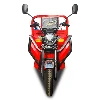
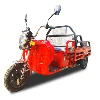
As the modern logistics system extends deeper into urban and rural areas, gasoline tricycles, with their unique technological characteristics and adaptability to various scenarios, exhibit distinct grassroots logistics attributes. Their logistics nature does not pursue large-scale, high-speed trunk transportation, but rather focuses on "last-mile distribution, flexible response, and cost adaptation," becoming a key micro-circulation transportation force connecting urban and rural markets and bridging production and sales.
From a logistics function perspective, gasoline tricycles are typical tools for "last-mile delivery and short-distance distribution." Compared to trunk trucks and electric tricycles, their continuous range and stable load-bearing capacity provided by fuel power enable them to undertake short-to-medium distance material transfers from counties to townships (such as bulk delivery of agricultural supplies to rural areas and centralized transportation of agricultural products), and also to reach deep into villages and streets to complete "last-mile" delivery (such as home delivery of express packages and supermarket restocking). This "bridging" function perfectly fills the capacity gap between trunk transportation and terminal receiving in the logistics network, forming a tiered connection of "large vehicles transferring to small vehicles, and small vehicles delivering to customers' doorsteps."
In terms of logistics efficiency, the advantages of gasoline-powered tricycles lie in the unity of "flexible adaptability and controllable costs." Their compact body and narrow wheelbase design allow them to freely navigate narrow streets, field ridges, or unpaved roads with a width of less than 3 meters, overcoming the "logistics blind spots" that four-wheeled trucks cannot reach due to size limitations. The instant refueling capability of fuel-powered vehicles (relying on the existing gas station network) avoids the time-consuming losses caused by charging time and insufficient infrastructure coverage of electric tricycles. This is especially true for categories sensitive to delivery time, such as fresh produce and daily necessities, ensuring "same-day delivery" and "next-day delivery" service commitments. At the same time, their purchase and maintenance costs are only 1/3 to 1/2 of those of four-wheeled trucks, and their energy consumption costs are also lower than electric vehicles of the same load capacity (especially in low-temperature environments), making them affordable for small and medium-sized logistics companies and individual merchants.
In terms of logistics service attributes, gasoline-powered tricycles possess both "versatility" and "customization" characteristics. Versatility is reflected in their ability to accommodate various forms of goods, including loose goods, bagged goods, and boxed goods, using flatbeds, sideboards, or simple box-type cargo boxes, meeting the transportation needs of diverse categories such as agricultural supplies, building materials, express delivery, and fresh produce. Customization is manifested in the ability to address specific issues such as moisture prevention, preservation, and securing special goods by adding tarpaulins, enclosed boxes, refrigeration equipment, or specialized shelves, thus extending the logistics service radius. For example, gasoline-powered tricycles with added insulation can achieve short-distance cold chain delivery of fresh agricultural products, while modified shelves can improve the efficiency of express delivery sorting and loading.
In the ecological value of the logistics network, gasoline-powered tricycles are the "capillaries" that activate the vitality of grassroots logistics. Their low-barrier-to-entry characteristics lower the economic barriers for individual operators to participate in logistics services, giving rise to a large number of micro-logistics units such as "mom-and-pop shops + tricycles." This not only expands the coverage of logistics services but also shortens response time through localized operations, enhancing the warmth and resilience of last-mile services.
In summary, the logistics nature of gasoline tricycles is rooted in grassroots needs. With "flexibility in last-mile distribution, cost-effectiveness, and inclusiveness in diversified services" as its core, it has become an indispensable micro-circulation transportation force in the modern logistics system, continuously providing practical support for the smooth flow of urban and rural logistics and the improvement of people's livelihood services.