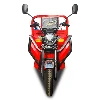
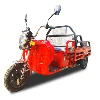
Gasoline tricycles, with their unique structural design and power matching, occupy an important position in short-distance urban and rural transportation, field operations, and small-scale logistics scenarios.Their technical characteristics are concentrated in efficient power transmission, reasonable load-bearing layout, and strong adaptability, forming a comprehensive advantage that balances economy and practicality.
In terms of the power system, gasoline tricycles mostly use single-cylinder or twin-cylinder air-cooled gasoline engines, which are characterized by simple structure, convenient maintenance, and good low-temperature starting performance. Engine displacement is mostly in the 150cc to 250cc range, meeting the power requirements for daily load carrying and climbing while avoiding excessive energy consumption. The matching gearboxes are mostly constant-mesh gear type with a clear speed ratio distribution, maintaining stable output under different loads and road conditions, ensuring both smooth starting and high-speed cruising.
The frame and chassis design emphasizes a balance between rigidity and lightweight. The main structure often uses a welded steel tube frame, which, after stress optimization, has good torsional resistance and can withstand large concentrated loads and impacts. The suspension system generally uses a front fork independent or linkage structure, supplemented by a reinforced leaf spring rear suspension, effectively mitigating the impact of bumps on cargo and ride comfort. The cargo box is mostly made of steel plate or composite materials, and its shape and size can be customized to facilitate loading, unloading, and space utilization.
The transmission and braking systems prioritize reliability and ease of control. Chain or shaft drive can be flexibly selected depending on the operating environment; chain drive is low-cost and easy to maintain, while shaft drive offers significant advantages in sealing and maintenance-free operation. Braking systems commonly use a combination of mechanical drum brakes or hydraulic disc brakes, providing stable braking force across different speed ranges, and parking safety can be improved by adding a parking brake.
Furthermore, gasoline tricycles emphasize intuitive and effortless handling design, with handlebar steering and a low-positioned foot pedal layout, allowing for quick and easy operation by various users. The fuel supply and ignition systems are highly integrated, and combined with mature electric or foot-start solutions, enhances all-weather usability.
Overall, the technical characteristics of gasoline tricycles lie in their compact structure, practical power matching, and balanced load-bearing and passability. These qualities enable them to maintain strong adaptability and economy in diverse application scenarios, making them important equipment for short-distance transportation and on-site operations.