I. Market Trends and Structural Changes
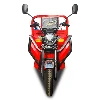
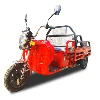
• Demand focus shifts from "incremental expansion" to "upgrading existing stock," with urban short-distance delivery and rural production and daily life scenarios operating in parallel. Electrification penetration continues to rise, increasing restrictions on gasoline models in cities, but they remain irreplaceable in counties and remote areas, presenting a pattern of "ebb and flow, structural differentiation." The industry consensus is that gasoline tricycles will focus more on niche heavy-duty, complex road conditions, and high-durability scenarios, with electrification dominating daily short-distance and last-mile urban delivery.
• Exports become a significant source of growth. Leveraging mature manufacturing and supply chain capabilities, demand in emerging markets such as Southeast Asia, Africa, and Latin America is steadily increasing. Products are mainly practical freight and passenger transport, with price and reliability becoming key competitive factors.
• Price wars and homogenization force value competition. Leading companies improve efficiency through platformization, modularization, and vertical integration of the supply chain, while regional small and medium-sized manufacturers shift towards customization, scenario-based solutions, and after-sales services to seek survival.
II. Policy and Regulatory Drivers
• Stricter environmental and emission regulations are driving product migration towards higher emission standards and lower-carbon technologies. Some regions are implementing restrictions/bans and differentiated regional management for gasoline-powered tricycles, with a more pronounced trend of prioritizing new energy vehicles and phasing out gasoline-powered tricycles in cities.
• Increased industry standardization and entry requirements are driving up costs for product consistency, safety, and environmental compliance, accelerating the elimination of low-end production capacity. In the medium to long term, regulation will lead to a stable demand for gasoline tricycles through "optimization of existing stock + in-depth development in specific scenarios."
III. Technology and Product Evolution
• Power and Energy Efficiency: While ensuring reliability, gasoline engines will continue to be optimized around efficient combustion, lightweight design, and low friction, matching more reasonable transmissions and gear ratios to balance climbing ability, load capacity, and fuel consumption.
• Intelligence and Safety: The penetration rate of basic safety features such as ABS, tire pressure monitoring, and brake performance self-checks is increasing; the freight sector is accelerating the adoption of lightweight intelligent connected functions such as positioning navigation, remote locking, and fleet management to improve operational efficiency and risk control capabilities.
• Comfort and Craftsmanship: Rising user demands for "ease of use, aesthetics, and comfort" are driving automotive-grade craftsmanship and structural design (such as chassis and body rigidity and NVH optimization) down to the three-wheeled category. Semi-enclosed/fully enclosed models show significant improvements in sealing, vibration reduction, and durability.
• Specialization and Platformization: Specialized chassis and superstructures for scenarios such as cold chain logistics, agriculture, mining, and sanitation are rapidly becoming standardized and modularized, shortening delivery cycles and reducing total lifecycle costs.
IV. Channels, Services, and Business Models
• Channel Integration: Offline distribution networks and online direct sales/e-commerce operate in parallel. Online channels handle display, price comparison, and outreach, while offline channels handle delivery, registration, financing, and after-sales service. Channel efficiency becomes a core competitive advantage.
• Service Radius and Spare Parts Guarantee: Building regional spare parts warehouses and mobile repair platforms reduces downtime; strengthening maintenance training and standardized operations improves repeat purchases and reputation.
• Finance and Operations: In the B2B market, lease-to-own, installment payment, and battery/vehicle leasing models lower the initial purchase threshold; fleet management SaaS and maintenance outsourcing services are expected to form a closed loop with vehicle sales.
V. Risks and Recommendations
• Major Risks: Fluctuations in raw material prices, rising international trade barriers/certification costs, expanding local road rights restrictions, and demand shifts due to accelerated electrification.
• Countermeasures:
• Focus on niche scenarios, deeply cultivate heavy-duty, complex road conditions, and high-durability segments to create differentiated product strengths.
• Promote platform-based/modular development to improve generalization and delivery efficiency, and reduce manufacturing costs.
• Strengthen compliance and quality systems, and proactively prepare for higher emission standards and environmental protection technologies.
• Establish overseas KD/localized assembly and after-sales networks to diversify single-market risks and get closer to customers.
• Improve the aftermarket ecosystem (spare parts, finance, insurance, maintenance), shifting from "selling vehicles" to "selling transportation capacity/selling services."