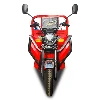
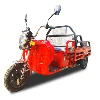
In urban and rural logistics, agricultural production, and short-distance passenger transport, gasoline tricycles, with their unique technical characteristics and adaptability to various scenarios, have formed significant comprehensive advantages, becoming an indispensable tool in grassroots transportation networks. Their advantages are not only reflected in power and load-bearing performance, but also extend to multiple dimensions such as economy, reliability, and environmental adaptability, providing efficient and sustainable solutions for different operators.
First, the continuity of power output and adaptability to operating conditions are outstanding. Gasoline tricycles are generally equipped with single-cylinder or twin-cylinder gasoline engines, with displacements mostly ranging from 150cc to 300cc. They possess low-speed, high-torque characteristics, and can still start smoothly even when fully loaded, overcoming the resistance of slopes, mud, and unpaved roads. Compared with electric tricycles, fuel power is less affected by temperature fluctuations and continuous operation, with a stable and predictable range, providing greater assurance in long-distance or complex road condition transportation and reducing the frequency and uncertainty of refueling mid-journey.
Second, they have strong load-bearing capacity and flexible space utilization. The three-wheeled structure, combining front-wheel steering with rear dual-wheel load-bearing, forms a stable mechanical support. The cargo box can be flatbed, sideboard, or a simple box-type, with dimensions and shape customizable to meet specific needs. It also supports the quick addition of protective accessories such as tarpaulins and guardrails. This design can meet diverse loading needs for bulk cargo, bagged agricultural supplies, and small equipment, while maintaining good maneuverability in narrow streets and field roads, improving transportation efficiency.
Furthermore, the purchase and operating costs are significantly advantageous. Gasoline tricycles have a mature structure, a complete industrial chain, readily available parts, and widespread maintenance technology, resulting in lower maintenance costs compared to most four-wheeled motor vehicles. Fuel replenishment relies on the existing gas station network, with low infrastructure barriers, making it particularly suitable for areas with insufficient power grid coverage or scarce charging facilities. For small and medium-sized businesses and individual farmers with limited funds, the balance between initial investment and operating expenses is highly attractive.
Finally, it exhibits excellent environmental adaptability and durability. The frame is mostly welded from high-strength steel, possessing good rigidity and torsional resistance, capable of withstanding frequent full loads and bumpy impacts. The suspension and running gear are optimized for harsh conditions such as rural dirt roads and construction sites, and the deep-tread tires enhance traction, effectively reducing the risk of slippage and getting stuck, ensuring high uptime and long service life.
In summary, gasoline-powered tricycles, with their reliable power, flexible load-bearing capacity, controllable costs, and strong environmental adaptability, continue to solidify their core competitiveness in the grassroots transportation sector, providing solid support for the micro-circulation of the urban and rural economy.