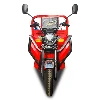
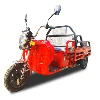
The widespread use of gasoline tricycles in urban and rural logistics, agricultural production, and short-distance passenger transport stems from their practically-oriented functional foundation. This foundation is not merely a collection of individual technologies, but a systematic integration of core elements such as power output, load-bearing structure, handling design, and environmental adaptability, collectively shaping their essential attributes of "being able to pull, move, and be used."
Power output is the primary prerequisite for functional realization. Gasoline tricycles mostly use single-cylinder or twin-cylinder gasoline engines with displacements concentrated in the 150cc to 300cc range, naturally possessing low-speed, high-torque characteristics. This characteristic allows them to output sufficient traction without relying on high speeds, perfectly adapting to scenarios such as starting fully loaded, climbing slopes, and driving on unpaved roads. The engine is directly connected to a simple and reliable transmission system (clutch, gearbox, rear axle), forming a short-path transmission of "power-drive," reducing energy loss while ensuring direct and efficient power response, providing stable kinetic energy support for heavy-duty transportation.
The load-bearing structure is the physical carrier for functional implementation. The three-wheel layout, through the classic combination of front-wheel steering and rear dual-wheel load-bearing, constructs a balanced system of "flexible steering + stable load-bearing." Open flatbeds, sideboards, or simple box-type cargo boxes can be quickly adjusted in size and protection (such as tarpaulins or railings) to accommodate diverse goods such as bulk cargo, bagged agricultural supplies, and small equipment, while the low loading platform design reduces loading and unloading difficulties. The semi-enclosed cab of some models further expands passenger capacity, making a single platform compatible with both freight and short-distance passenger transport needs.
Handling and off-road capability design enhances the vehicle's versatility across various scenarios. The compact body size and narrow wheelbase allow for agile maneuvering in narrow spaces such as streets and field ridges; for unpaved roads such as rural dirt roads and construction site potholes, the combination of hydraulically damped front forks and leaf spring rear suspension effectively absorbs bumps and impacts, while deep-tread tires enhance grip, ensuring driving stability in complex road conditions.
Environmental adaptability ensures continued functionality. Mature air-cooled/simple water-cooled heat dissipation systems and wear-resistant mechanical components reduce the probability of failure in high-temperature and dusty environments. The universality of carburetor or electronic fuel injection systems reduces reliance on high-precision supporting facilities (such as charging stations), enabling stable operation of the vehicle in areas with weak power grids.
It is this organic synergy of these fundamental functions that allows gasoline tricycles to transcend the limitations of a single tool, becoming a comprehensive solution for grassroots transportation that is "low-cost, highly reliable, and highly adaptable," continuously supporting the peripheral circulation of the urban and rural economy.