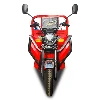
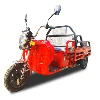
In urban and rural transportation and short-distance operations, gasoline tricycles coexist with various other modes of transport. Their unique performance and design philosophy distinguish them from similar products such as electric tricycles, four-wheeled freight vehicles, and motorcycles. A deep understanding of these differences helps clarify their application boundaries and market positioning.
Compared to electric tricycles, the core difference between gasoline tricycles and electric tricycles lies in their power source and operational continuity. Electric tricycles rely on battery energy storage, offering advantages in zero emissions and low noise, but their range is limited by battery capacity and charging infrastructure, and they are prone to power degradation when climbing hills under heavy loads, in low-temperature environments, or during long-distance transport. Gasoline tricycles use internal combustion engines, providing stable torque output. Their range depends on the fuel tank capacity, allowing for continuous operation in areas without charging facilities, making them more suitable for complex working conditions and long-distance transport tasks.
Compared to four-wheeled freight vehicles, gasoline tricycles differ significantly in structure and mobility. Four-wheeled vehicles offer superior stability and high-speed performance, but their larger width and turning radius make them difficult to maneuver in narrow streets, field ridges, or market roads. Gasoline tricycles, with their three-wheeled layout, offer a more compact body, flexible front wheel steering, and dual rear wheel load-bearing capacity, allowing them to navigate in confined spaces. Furthermore, their purchase and maintenance costs are generally lower than four-wheeled vehicles, making them more affordable for small and medium-sized businesses.
Compared to two- or three-wheeled motorcycles, gasoline tricycles have significant advantages in load-bearing capacity and practicality. Motorcycles are primarily for personal travel, with extremely limited cargo space, and their high-speed stability is inferior to tricycles. Gasoline tricycles, equipped with a fixed cargo box or platform, can stably carry hundreds of kilograms of goods and maintain good balance under load, making them more suitable for production and transportation needs than simply for personal commuting.
In addition, gasoline tricycles and diesel tricycles differ in fuel characteristics and applicable scenarios. Gasoline engines start quickly, run smoothly, and perform well in low temperatures, making them suitable for frequent start-stop operations and varying working conditions. Diesel engines offer higher torque and better fuel economy, but are heavier and vibrate more, making them more suitable for heavy-duty long-distance travel. Gasoline tricycles, on the other hand, demonstrate greater adaptability for light to medium loads and flexible dispatching.
In summary, gasoline tricycles, with their reliable fuel power, flexible and compact structure, and relatively controllable cost, stand out among diverse vehicle types. They play an irreplaceable role in scenarios where charging is inconvenient, space is limited, or medium loads are required, making them a practical choice for grassroots transportation networks.