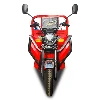
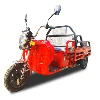
In grassroots transportation and daily life scenarios, the practicality of gasoline tricycles stems not from outstanding single performance characteristics, but from the synergistic effect of multiple advantages including power, structure, cost, and environmental adaptability. This allows them to accurately respond to the core demands of urban and rural users for "reliability, economy, and flexibility," becoming a key tool for solving practical operational pain points.
Practicality in terms of power is primarily reflected in range and operational stability. The single-cylinder or twin-cylinder gasoline engines in gasoline tricycles, with their low-speed, high-torque characteristics, are well-suited for starting fully loaded, climbing slopes, and driving on unpaved roads. Furthermore, fuel-powered operation is not limited by low temperatures or continuous operating time, and the range can be flexibly planned according to the fuel tank capacity. This avoids operational interruptions caused by insufficient charging infrastructure or battery degradation, which is particularly advantageous in mountainous areas and remote towns with weak power grids.
The flexibility in load capacity and space further enhances their practical value. The three-wheeled structure, with its balanced design of front-wheel steering and rear dual-wheel load-bearing, ensures vehicle stability under heavy loads while allowing for easy maneuverability through narrow streets and field ridges with its compact front compartment width (typically less than 1 meter). Flatbed, sideboard, or simple box-type cargo boxes can be quickly adjusted to accommodate different cargo types such as agricultural supplies, building materials, and daily necessities. The convenient addition of protective accessories like tarpaulins and fences further enhances cargo protection and loading/unloading efficiency, significantly reducing the intensity of manual handling.
Economy and ease of maintenance are key factors supporting its practicality. Gasoline tricycles have a mature structure, a well-established parts supply chain, and a wide network of repair shops, resulting in significantly lower maintenance costs compared to four-wheeled vehicles. Fuel replenishment relies on the existing gas station network, requiring no additional infrastructure investment. For small and medium-sized businesses and individual farmers, the initial purchase and long-term operating return on investment is more attractive.
Environmental adaptability ensures the universality of its practicality. The frame is welded from high-strength steel, ensuring reliable torsional resistance and load-bearing capacity, capable of withstanding frequent bumps and heavy impacts. The combination of hydraulically damped front forks and leaf spring rear suspension, along with deep-tread tires, effectively reduces the risk of skidding and getting stuck on unpaved roads, maintaining high uptime even in dusty, wet, or hilly environments.
In summary, the practicality of gasoline-powered tricycles stems from their deep adaptation to grassroots transportation scenarios. With their "sufficient, durable, and easy-to-use" characteristics, they continuously provide efficient and sustainable solutions for urban and rural logistics, agricultural production, and social services, becoming an indispensable and practical vehicle in the grassroots economic cycle.