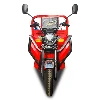
As a multi-functional and highly adaptable basic transportation tool, the effective realization of the value of gasoline tricycles depends not only on hardware performance but also on scientific and reasonable application methods. In practical use, a system of methods encompassing selection and configuration, operational procedures, maintenance, and safety management can significantly improve operational efficiency, extend service life, and reduce operational risks.
Firstly, there is the method of selecting and configuring according to needs. Appropriate engine displacement and load-bearing structure should be selected based on the nature of the transported goods, the transport distance, and road conditions. For example, for heavy-load or frequently hilly conditions, a twin-cylinder engine and a large-size flatbed cargo box are suitable to improve torque reserve and loading stability; for operations in narrow streets or field roads, a compact, small-turning-radius single-cylinder lightweight model should be prioritized to ensure flexible passage. For different tasks, tarpaulins, guardrails, enclosed bodies, or special equipment can be added to precisely match vehicle functions with the scenario.
Secondly, there is the method of standardized operation and dynamic adjustment. Drivers should be familiar with the coordination of clutch, gear shifting, braking, and throttle control, especially when starting fully loaded or driving on slopes. They must rationally control engine speed and vehicle speed to avoid engine overload or tire slippage. In complex road conditions, drivers should anticipate road conditions, downshift to increase torque as needed, and maintain a safe following distance. Passenger or special-purpose vehicles must also ensure passenger restraint and equipment stability to prevent accidents caused by bumpy driving.
Furthermore, scientific maintenance and condition monitoring are crucial. A regular maintenance system should be established, including scheduled checks of engine oil, fuel, and air filter cleanliness, testing brake sensitivity and tire pressure, and timely tightening of loose parts. If abnormal noises, vibrations, or power loss occur during engine operation, the engine should be stopped immediately for inspection to prevent minor faults from escalating into major damage. For vehicles used in dusty or humid environments for extended periods, the cooling system and electrical connections should be protected against moisture and corrosion.
Finally, a systematic approach to safety management is essential. Before use, fuel and lubricant levels and brake performance should be confirmed to be within acceptable limits; operation with defects should be strictly prohibited. When driving, adhere to speed limits, especially in densely populated areas such as markets and schools, where you should slow down. Assess the ground's load-bearing capacity and slope at the work site to prevent tipping under heavy loads. When not in use for extended periods, store properly, drain the fuel or add corrosion inhibitors to reduce the risk of rust and fuel line blockage.
In summary, practical methods for using gasoline-powered tricycles cover all aspects, including model selection and configuration, operation and control, maintenance and monitoring, and safety management. Through targeted and standardized implementation, their transportation efficiency and economy can be maximized, providing continuous and reliable support for grassroots operations.